The air path, stage by stage
One sealed body, six sequential operations. Each stage is sized against the one before it so pressure loss stays flat across a full service interval.
Capture
Canopy velocity 0.35–0.45 m/s
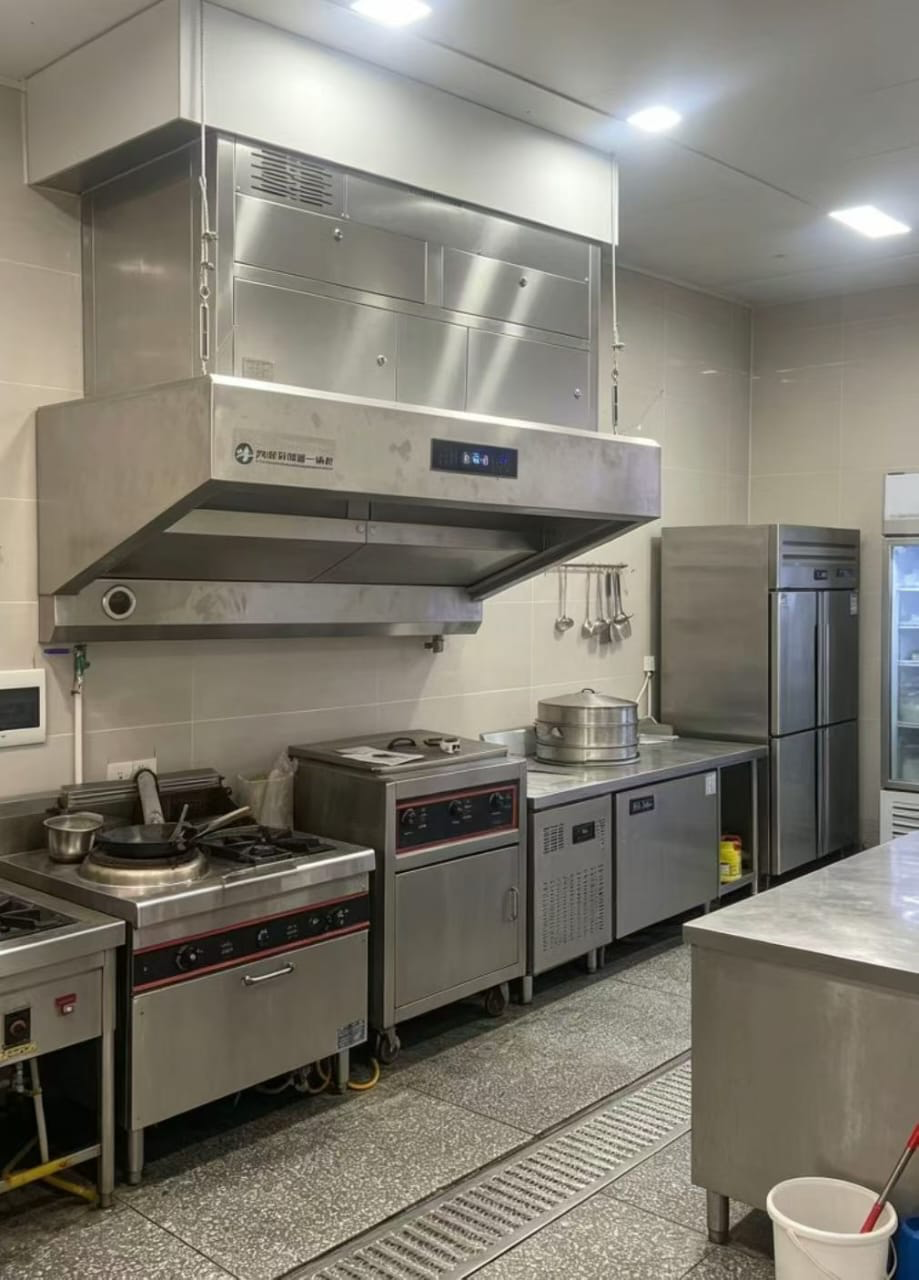
The full-width canopy holds the thermal plume above the cooking line and pulls the entire rising column into the body of the unit before it can spill into the room.
Separation
Stage 1 — baffle bank
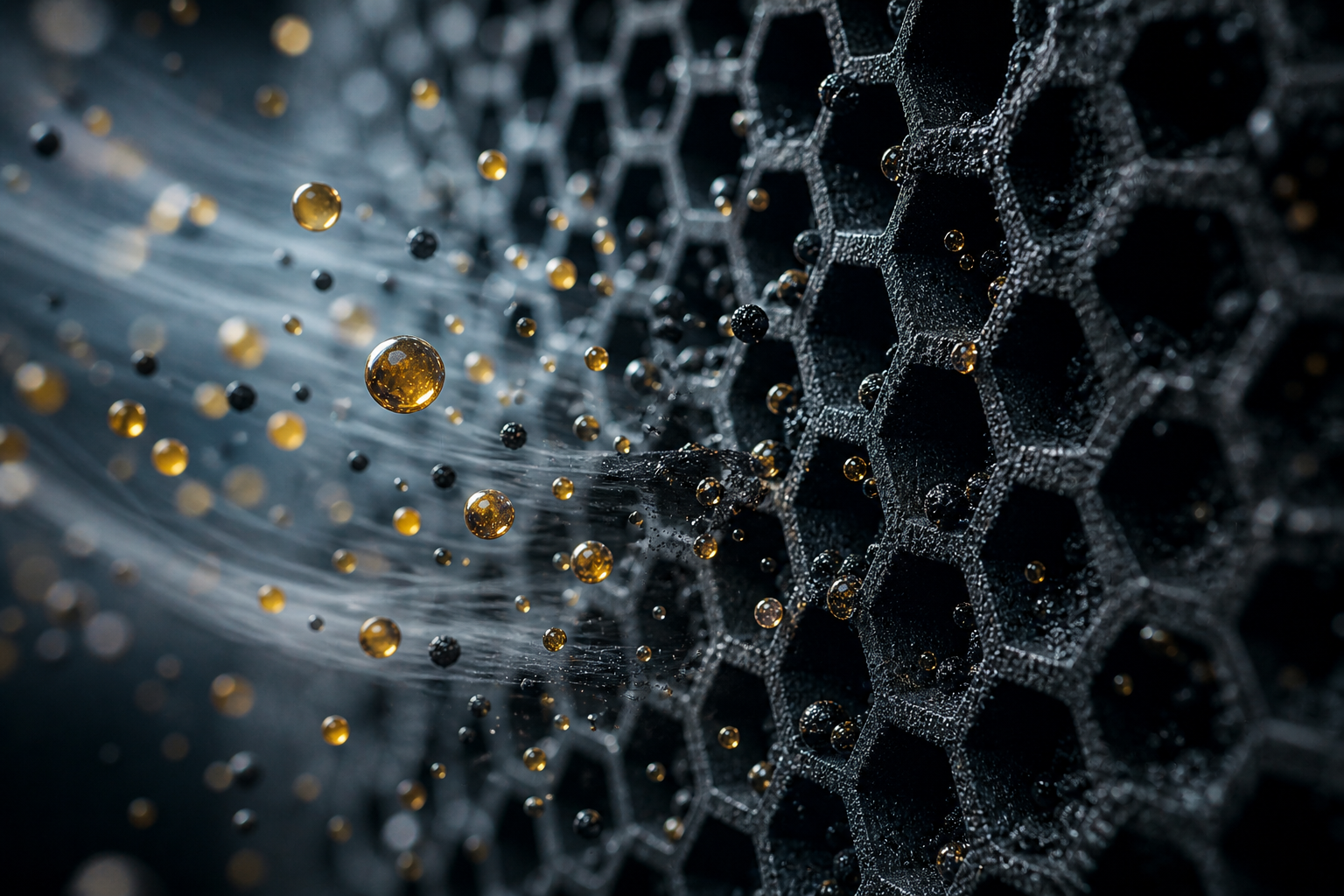
Air is forced through opposed baffles. Sudden direction changes throw heavy grease droplets and sparks out of the stream and into the collection channel.
Mechanical filtration
Stages 2–3 — mesh + panel
Layered stainless mesh removes fine aerosol, then a progressive-density panel captures sub-micron particulate and residual smoke solids.
Adsorption
Stage 4 — carbon bed
Deep-bed activated carbon holds volatile organic compounds — the molecules responsible for the smell of frying, grilling and smoking.
Oxidation polish
Stage 5 — final treatment
The last stage breaks down remaining organics so the discharged air carries no perceptible kitchen signature.
Discharge
4000 m³/h @ 1.8 kW
Treated air is returned to the space or pushed into a short duct run. No chimney, no roof plant, no plume above the building line.
Stable across the interval
Filter loading is monitored continuously by differential pressure across the cassette bay. The panel reports remaining capacity, so filters are changed on condition rather than on a guess — and airflow never quietly collapses mid-service.
- Airflow
- 4000 m³/h
- Absorbed power
- 1.8 kW
- Footprint
- 1600 × 1100 mm
- Height
- 1365 mm
Next step
Send us your kitchen layout
Send us your extraction volume, cooking line and site constraints. Our engineers return a sized configuration and installation plan.
Request a quote